
Explore the fourth edition of the annual Tech Hubs report led by the Mobile World Capital Barcelona Foundation and review the evolution of international technology hubs established in Catalonia up til 2025.
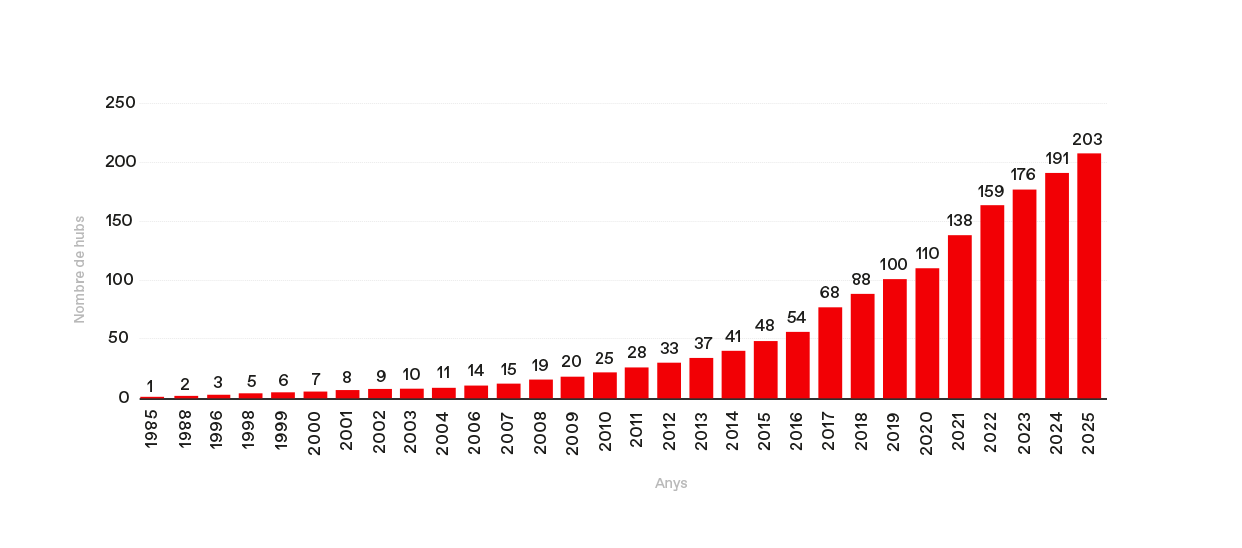
203 hubs consolidate the ecosystem’s growth
The findings of the Tech Hubs Overview 2026 confirm Catalonia’s consolidation as one of Europe’s leading tech ecosystems In 2025, the region reached 203 active tech hubs. Throughout the year, 12 new hubs were established by companies from Germany, France, the United States, the United Kingdom, Switzerland, Japan and China. These new centres created 609 jobs and generated more than €54 million in economic impact. The main factors influencing their decision to choose the region are its reputation, existing business presence, high-quality technological infrastructure and connectivity, and government incentives.
€4.109 billion in economic impact and more than 46,000 professionals
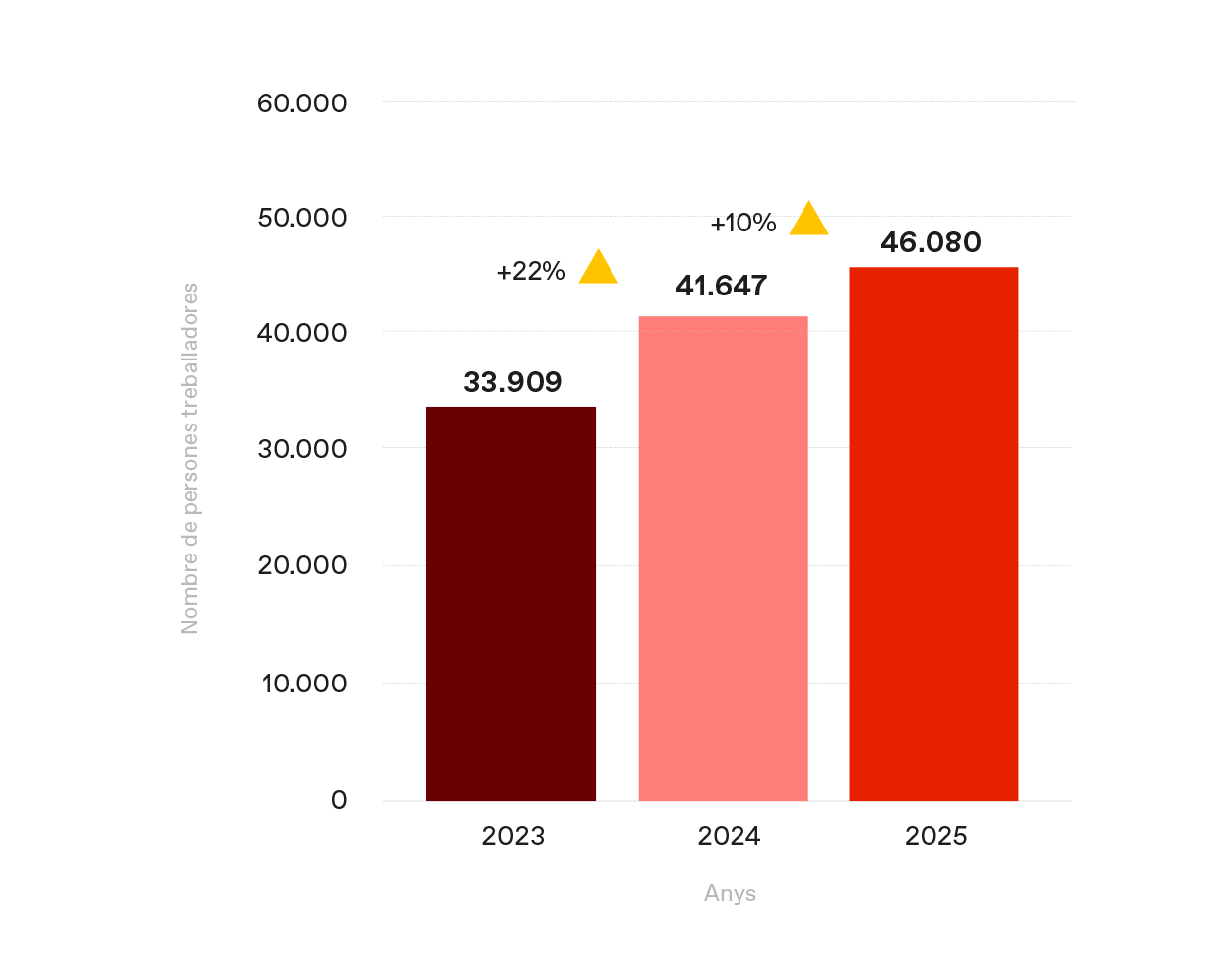
Tech hubs generated a total economic impact of €4.109 billion in 2025, with an average of €20 million per hub. Moreover, the ecosystem employs 46,080 people — 10% more than the previous year. In 2025 alone, 4,433 new jobs were created. The sectors leading in job creation were health (1,392 new professionals), consulting and business services (1,200), and industrial systems (957).
Technology development, experience industries and business services hold the highest number of hubs
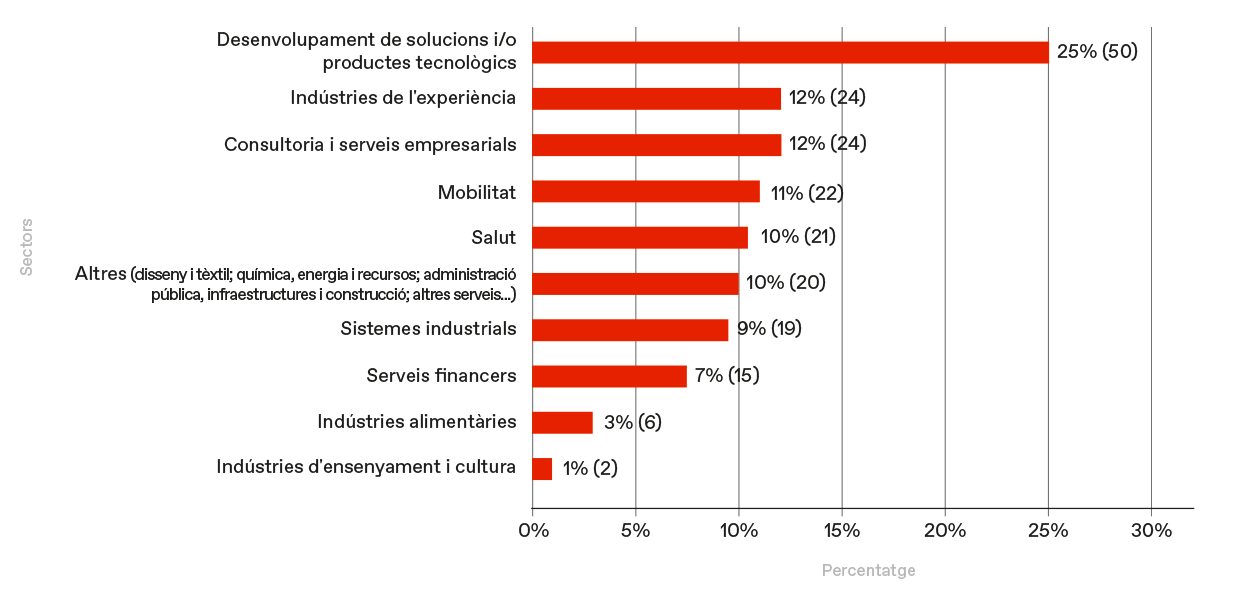
The sectoral distribution of tech hubs in Catalonia reflects a diversified and mature ecosystem, with a clear concentration in technological solutions and product development (25%), experience industries (such as gaming) (12%), and consulting and business services (12%). In terms of size, the largest hubs are found in industrial systems (an average of 494 professionals) and the food industry (425), followed by financial services (355) and health (330) — all above the average hub workforce of 227 employees.
AI, data, cloud and cybersecurity: high-priority profiles
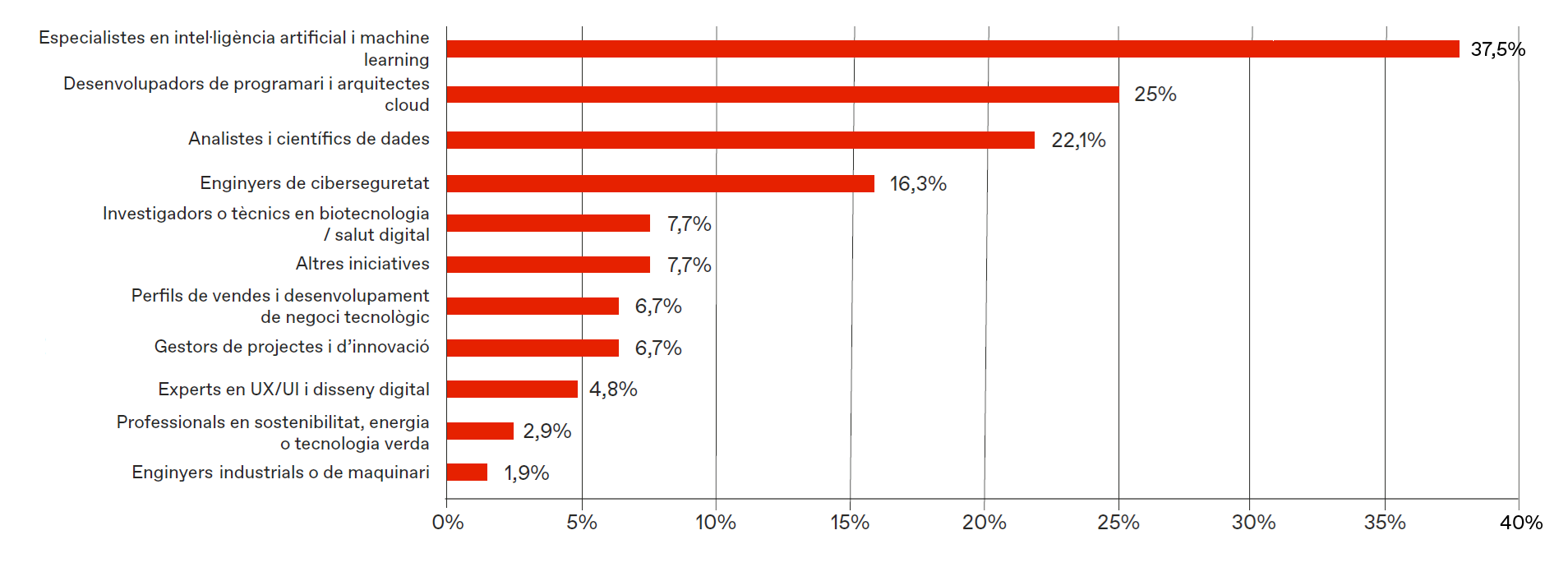
Hubs maintain the demand for software developers, IT consultants and cybersecurity analysts. However, the most difficult profiles to recruit are specialists in artificial intelligence and machine learning, cloud architects, data analysts and data scientists, as well as cybersecurity professionals. This labour market pressure reflects the high level of specialization of the projects developed and the global competition to attract advanced tech talent.
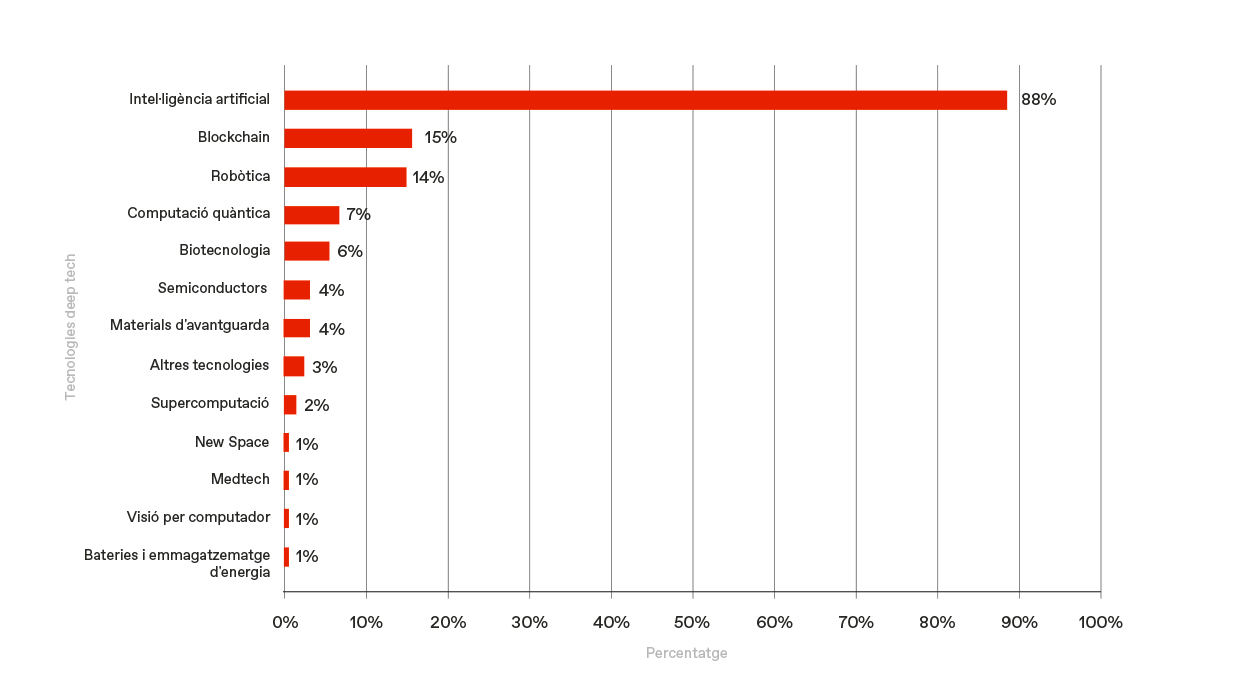
AI is the main deep tech technology developed by hubs
Catalonia’s tech hubs continue to lead in software development and architecture capabilities, with a steady increase in data-driven technologies. Moreover, 65% of hubs develop deep tech projects and, within this field, artificial intelligence is present in 88% of cases.
Discover the full report
The Tech Hubs Overview 2026 report, prepared in collaboration with ACCIÓ — the Agency for Business Competitiveness of the Government of Catalonia — and the International Economic Promotion Directorate of Barcelona City Council, provides a comprehensive overview of the ecosystem’s evolution, its economic and employment impact, talent profile, technological capabilities and future challenges of the international hubs established in Catalonia.