
- The Mobile World Capital Barcelona report “The Deep Tech Spin-outs Ecosystem in Spain 2025” indicates that Andalusia generates 9.5% of Spanish companies emerging from universities and research centres.
- In the region, the spin-out ecosystem records an annual turnover of more than €112 million and generates over 1,000 high-value jobs.
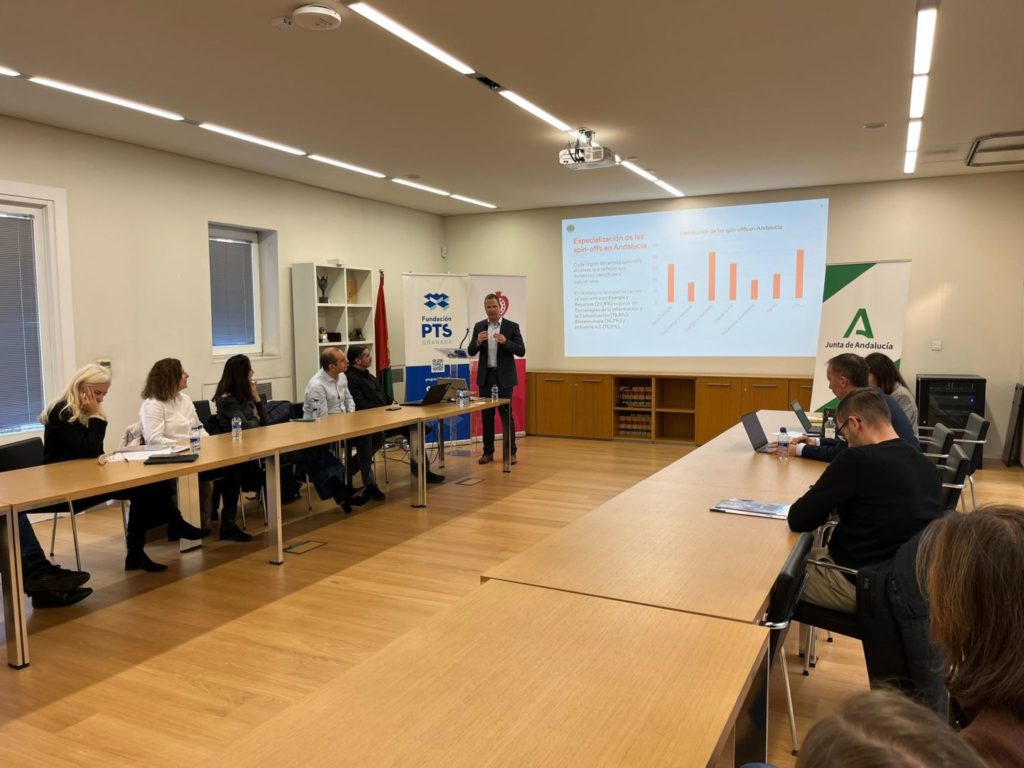
- Spin-outs arising from universities and research centres in Andalusia specialise in areas such as biotechnology (19.8%), information and communication technologies (ICT) (17.4%), and energy and resources (16.7%).
12/December/2025
Andalusia ranks fourth in the generation of deep tech spin-outs, according to the report “The Deep Tech Spin-outs Ecosystem in Spain 2025” produced by Mobile World Capital Barcelona. The study highlights the region’s role as one of the driving forces in the incubation of companies emerging from universities and research centres, with a total of 80 active spin-outs, representing 9.5% of all spin-outs generated in Spain. With these figures, Andalusia consolidates its position as the fourth Spanish region in the incubation of these companies.
The Andalusian spin-outs ecosystem generates 1,012 high-value jobs and an annual turnover exceeding €112 million. These companies specialise in strategic sectors such as Biotechnology, Information and Communication Technologies (ICT), Energy and Resources, and Industry 4.0, areas that reflect the scientific and industrial strength of the region.
At national level, the report reveals that the number of deep tech spin-outs has grown by 3.6% over the past year, reaching 1,007 active companies, with a combined turnover of €1.4 billion and 13,456 high-value jobs.
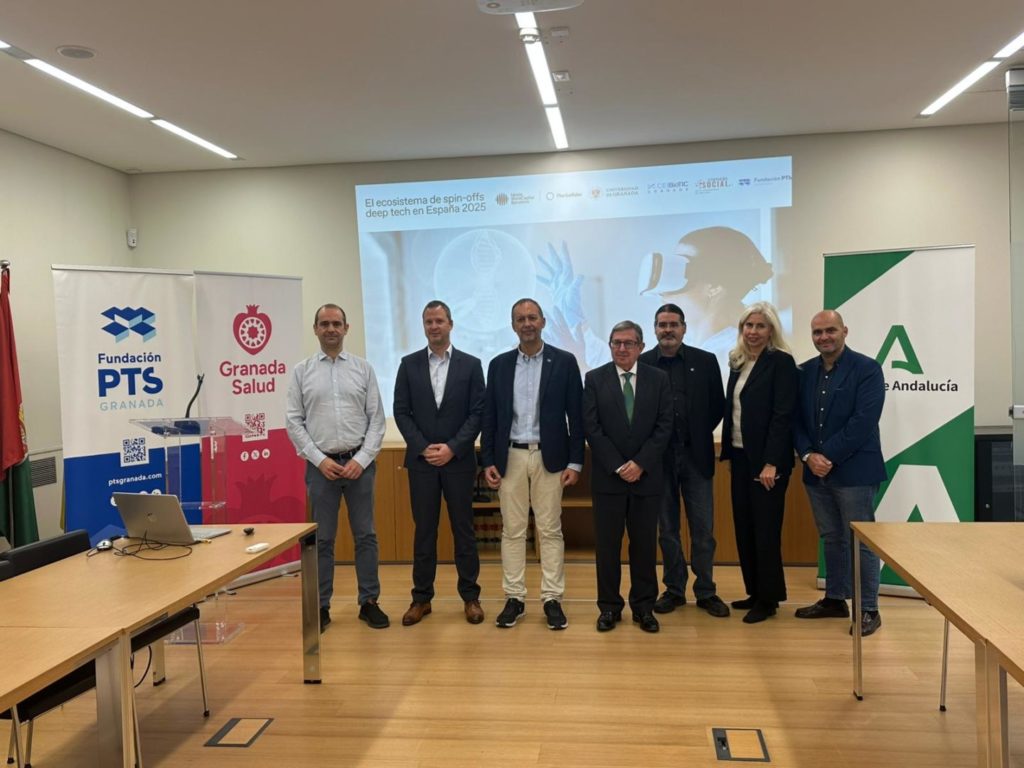
These figures were presented at an event organised by the University of Granada (UGR), the Health Sciences Technology Park Foundation (PTS), the Social Council of the UGR and Mobile World Capital Barcelona, through its The Collider programme, held at the headquarters of the Health Sciences Technology Park Foundation (PTS) in Granada.
“The development of 80 deep tech spin-outs in Andalusia confirms the maturity of its scientific and technological ecosystem. The aim of Mobile World Capital Barcelona is to help accelerate this transfer of knowledge to the market, supporting researchers in the creation of companies that deliver value in key sectors such as biotechnology, energy and ICT,” explained Albert Mascarell, Director of the Tech Transfer Area at Mobile World Capital Barcelona.
For his part, Carlos Sampedro Matarín, Director of Knowledge Transfer and Innovation at the University of Granada, highlighted the university’s role in knowledge transfer: “Supporting research teams throughout the valorisation process carried out by the University of Granada through its Technology Transfer Office (OTRI) facilitates the creation of spin-outs that have an impact on the territory and generate scalable economic fabric based on socially relevant knowledge. The development of our region is one of the strategic pillars of the University of Granada, and to achieve this it is essential to maintain strategic alliances with key stakeholders, such as the PTS Foundation.”
The event also featured contributions from Luis González Ruiz, Managing Director of the Health Sciences Technology Park Foundation, who commented: “The objective of the PTS Foundation is to play a decisive role in the creation of new companies that strengthen our ecosystem. The ongoing collaboration with the University of Granada, through its OTRI, is already delivering results, as reflected in the positive figures included in the report. In addition, PTS Granada serves as a link between the business world and the main actors that drive the system: UGR, CSIC, SAS, TRADE, Andalucía Emprende and the Chamber of Commerce.”
The event included a round table with several spin-outs that illustrate Andalusia’s capacity to generate innovative solutions, such as Destina Genomics, which enables precise detection of nucleic acids with a particular focus on RNA biomarkers for research and clinical applications; Pharmamel, which develops an innovative dermobiotechnological technology that stimulates the skin’s natural repair mechanisms; and the MouseData project, which develops innovative tools based on the monitoring of rodents using artificial intelligence to improve drug development.
The event also featured participation from the Catalan spin-outs OneCareAI, which has developed a solution for the early detection of stroke through wearables and is part of The Collider programme, which promotes technology transfer by supporting scientific projects in their transition to the market.
Stay up to date about everything
Subscribe to stay up to date with the latest content from Mobile World Capital Barcelona.