
- Kate Darling places ethics and trust at the heart of artificial intelligence development
- The researcher warns of the social challenges of advanced robotics and calls for responsible innovation
- Darling emphasised that “The idea that we should be recreating human skills with robots that are so embedded makes technology boring. Why are we creating humans if we could do so much more?”
- The robotics specialist also reflected on legislative frameworks and considered that “Europe’s regulation is quick and a priority, however America needs more regulation”
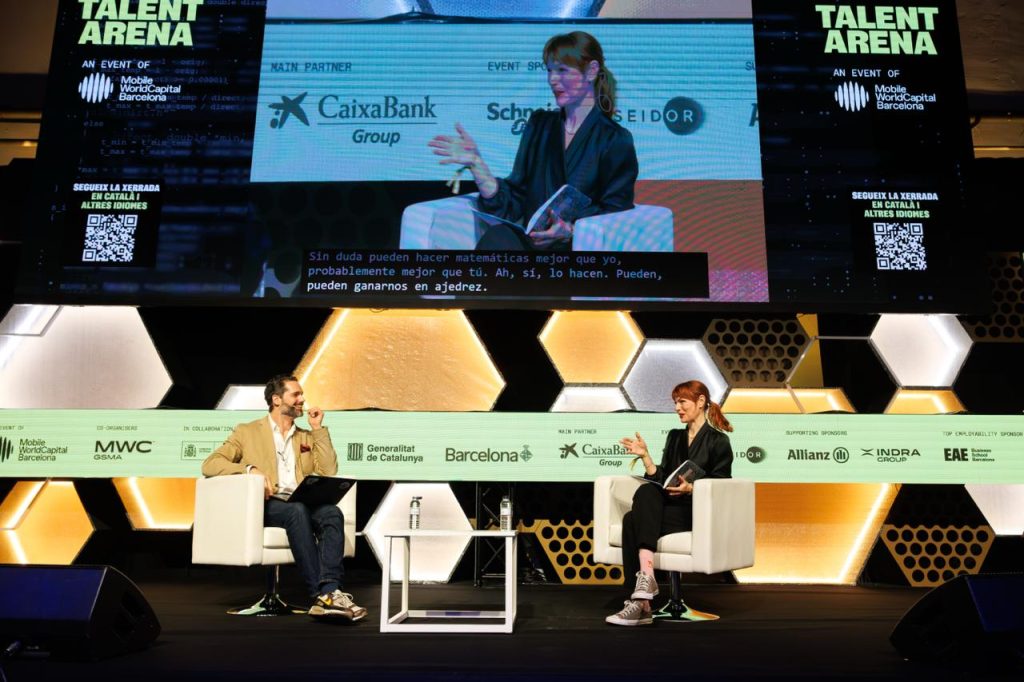
The second day of Talent Arena featured a keynote of Kate Darling, researcher and an international expert in human-robot interaction. During her speech, Darling analysed the challenges posed by the expansion of advanced robotics and autonomous systems, focusing on how humans respond emotionally and socially to increasingly sophisticated machines.
“We are expecting too much, too quickly, from robots. Change is coming, but we must be patient”, said Darling, underlining that the challenge is not solely technical, but profoundly human.
“People’s expectations are never matched with the reality of what robots can do; they cost 6 figures and do amazing things if you understand the arts of robotics. People’s expectations even investors are too high”, added.
Human-robot interaction and technological barriers
Darling highlighted the usefulness of robots, while noting that they do not need to resemble humans: “The idea that we should be recreating human skills with robots that are so embedded makes technology boring. Why are we creating humans if we could do so much more?”.
She illustrated this point by adding, “Humanoid robots are very difficult to programme; we have not yet even solved domestic tasks”.
Ethics and trust in the development of emerging technologies
Another of the central topics of the keynote was her call to integrate principles of ethics and governance from the earliest stages of artificial intelligence system design. Darling remarked that ethics cannot be treated as a complementary element, but rather as a structural component of technological innovation.
“We tend to make machines the focus on ethics when we should be holding humans accountable. When we shift the accountability or blame to the machine, we are not addressing the real problem, people and companies must be responsible”, stressed.
Political commitment and regulation
Darling rejected the idea that robots are to blame for destroying jobs, arguing instead that everything depends on how they are used, as they can also assist with many tasks that are tedious for humans and enhance their work. For this reason, she called for “politicians to care about people and jobs, beyond the economic profit that companies seek”.
She also offered an analysis of the international landscape: “Europe’s regulation is quick and a priority, however America needs more regulation. Lots of countries look into Europe for its steps, I believe that even if we make mistakes Europe is paving the path and it is important for people to see”.
Stay up to date about everything
Subscribe to stay up to date with the latest content from Mobile World Capital Barcelona.