
MWCapital is presenting at its stand at MWC 2026 an interactive experience showcasing the potential of nanobot technology for the treatment of diseases such as cancer.
The technology, which has already achieved a 90% reduction in bladder tumours in preclinical trials, has been developed by Nanobots Therapeutics, a spin-out of the Institute for Bioengineering of Catalonia (IBEC) and ICREA.
04/March/26
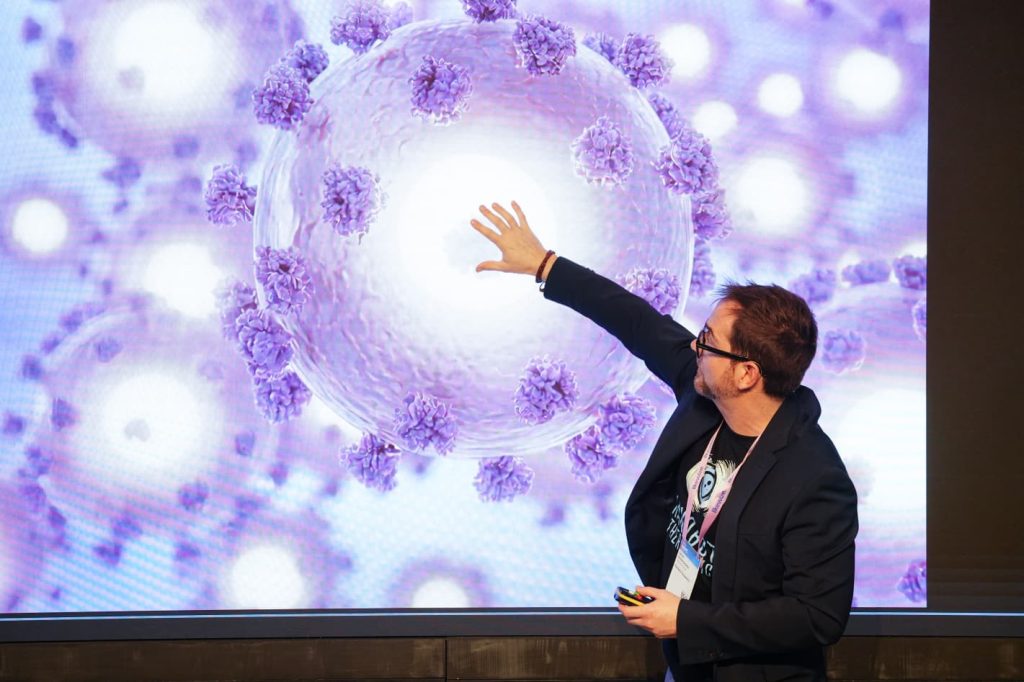
Mobile World Capital Barcelona, in collaboration with Nanobots Therapeutics –a company emerging from the Institute for Bioengineering of Catalonia (IBEC) and ICREA– is presenting at its stand at MWC26 one of the most promising innovations in healthcare: therapeutic nanobots. This pioneering technology is based on the creation of self-propelled nanoparticles that deliver medication precisely to areas affected by tumours or other diseases, increasing treatment efficiency while reducing associated side effects.
Preclinical trials have shown highly promising results: a single dose is capable of reducing bladder tumours by up to 90%, eliminating the need for the usual 6 to 14 hospital visits required for patients with this condition. This represents a direct impact on patients’ quality of life and on the sustainability of healthcare systems. The innovation opens the door to a new era of minimally invasive, personalised and highly efficient treatments.
Bladder cancer is currently one of the most commonly diagnosed cancers worldwide, with more than 614,000 new cases each year, according to data from the World Health Organization’s International Agency for Research on Cancer. It is also one of the most costly cancers to treat and has one of the highest recurrence rates, reaching up to 60%.
The nanobots are nanoparticles coated with an enzyme, urease, which uses the urea present in urine to propel itself towards the tumour. They incorporate different types of medication for localised therapy, reducing the need for systemic treatments and hospitalisation. The use of algorithms and computational methods makes it possible to analyse the swarm movement of millions of nanobots, including within the bladders of mice, as well as their penetration and accumulation in target tissues. In the future, artificial intelligence (AI) will also help reduce development time and costs, for example by designing the most suitable combinations of nanoparticle, enzyme and medication for different therapeutic indications.
The combination of these technologies promises to shorten the time required for treatments to reach patients and enhance therapeutic effectiveness.
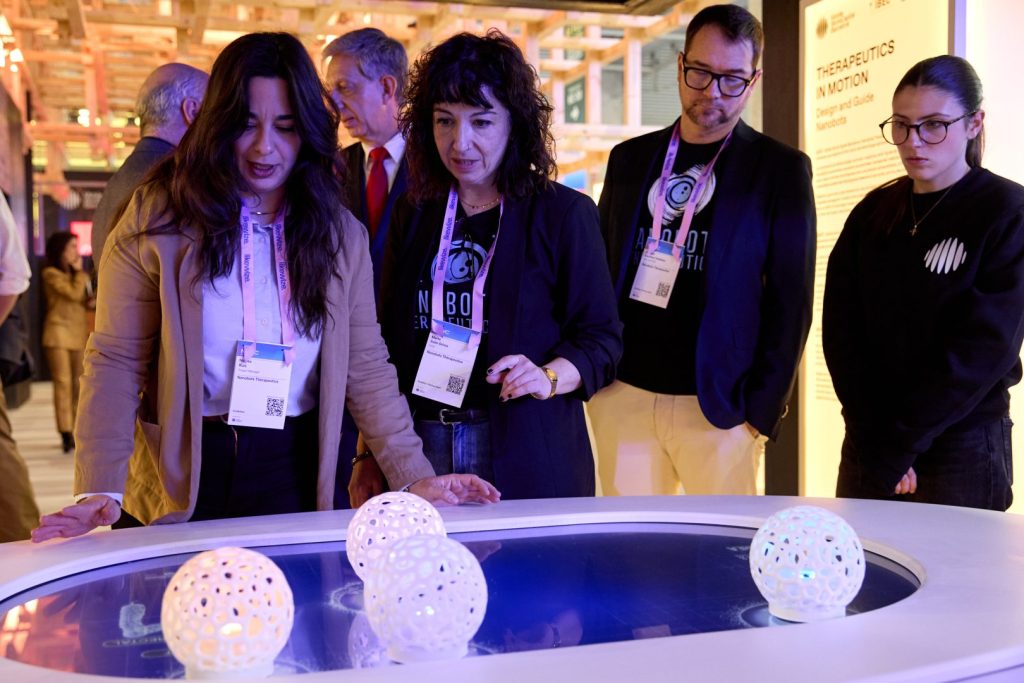
The immersive experience at the MWCapital stand enables visitors to understand how the combination of computational methods, artificial intelligence and nanotechnology makes it possible to study the behaviour of autonomously moving nanobots within a human organ or body cavity, targeting cancer cells with extraordinary precision. Visitors take part in an interactive simulation recreating the design and movement of these nanobots, demonstrating how technology maximises therapeutic efficacy.
With this initiative, MWCapital reaffirms its commitment to technology transfer and applied research, positioning MWC as a meeting point for connectivity, science and social impact.
Stay up to date about everything
Subscribe to stay up to date with the latest content from Mobile World Capital Barcelona.