Osmar Bambini, CIO & Co-founder da umgrauemeio
The year Brazil hosted COP30 was not just another milestone in the global climate calendar. It became a mirror, reflecting both the scale of the climate emergency and the quiet, often invisible solutions already taking shape on the ground. Across the Amazon, the Pantanal, the Cerrado, and peri-urban forests, one message became impossible to ignore: fires are no longer isolated disasters. They are systemic crises -ecological, social, climatic, and political at once.
And yet, amid record temperatures, extreme droughts, and unprecedented burned areas, something else also became clear. Resilience does not come from technology alone, from policy alone, or from communities alone. It emerges from the integration of all three. This understanding forms the foundation of our approach at Embrace the Forest.
Brazil’s COP year unfolded during what scientist Stephen Pyne describes as the Pyrocene, an era in which fire becomes a dominant force, reshaping landscapes, economies, and lives. Within this context, the conversation about fire began to shift. Gradually, but with growing confidence, the narrative moved away from the idea of “zero fire” toward a more mature understanding: fire can be ecological or destructive; fire can be a tool or a weapon; fire can be managed (or ignored until it becomes catastrophic).
At the Social Innovation House in Belém during COP30, this shift took shape in a simple yet powerful way. People gathered around a single fire, sharing experiences across worlds that rarely intersect – indigenous leaders, community fire brigades, scientists, public officials, technologists, and funders. The conclusion that emerged was practical rather than theoretical. Fire cannot be controlled with technology alone. It cannot be managed without the people who live with it. And community efforts cannot be scaled without intelligence, data, and coordination.
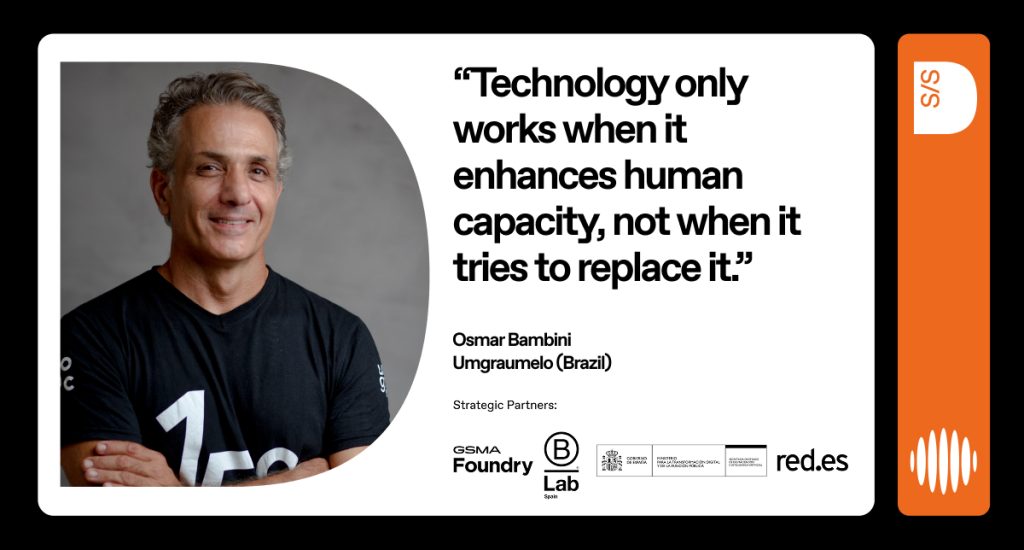
Embrace the Forest was born from this realization. It is not a project about deploying technology into territories, but about building resilience with territories—combining real-time intelligence, governance, and local leadership. In the Amazon and the Pantanal, this approach integrates early AI-based detection with community fire brigades, reducing response times from hours to minutes. It shifts effort away from constant emergency response toward prevention, planning, and restoration, while also building transparency and trust among communities, NGOs, governments, and funders. Across different biomes, the lesson has remained consistent: technology only works when it enhances human capacity, not when it attempts to replace it.
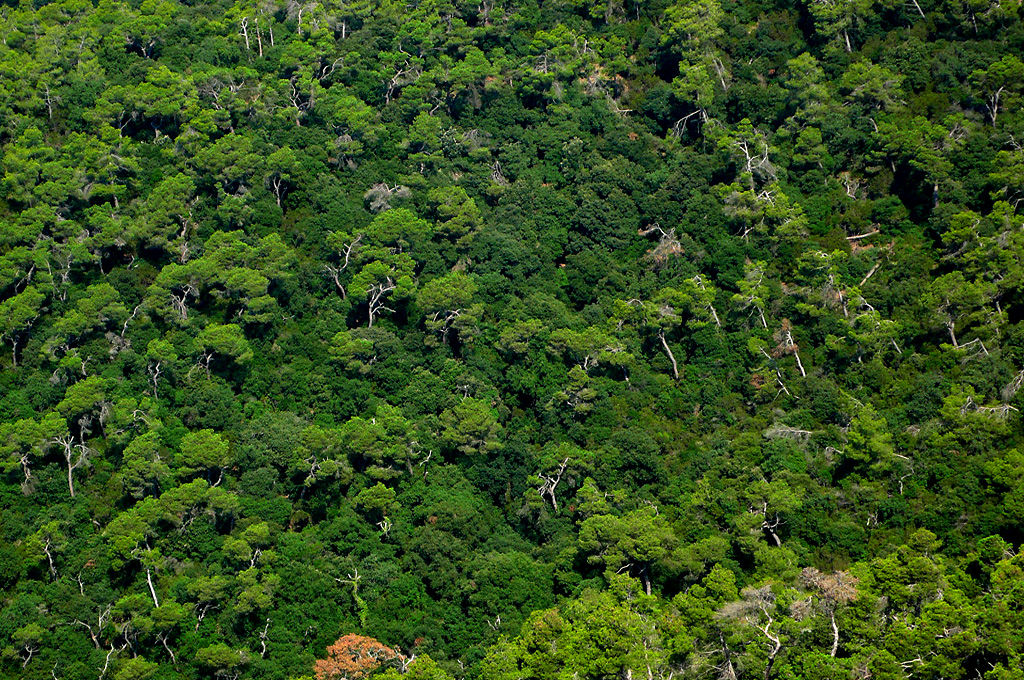
At first glance, the Parc Natural de Collserola, surrounding metropolitan Barcelona, may seem far removed from the Amazon. It is a different biome, governed under different institutional arrangements, and shaped by distinct socio-economic conditions. Yet the core challenge is strikingly similar. Collserola is a peri-urban forest under increasing climate stress, where extreme heat and prolonged drought elevate fire risk, dense vegetation intersects with critical urban infrastructure, and prevention, early detection, and coordination are far more effective than reaction. In this context, public institutions, civil society, and technology must operate as an integrated system.
This is why Collserola is more than a pilot. It serves as a bridge between worlds. What we have learned in remote territories—about integrating data with local knowledge, building trust, and designing systems that people actually use – becomes directly applicable to Europe’s Mediterranean landscapes. In return, Collserola offers something equally valuable: a living laboratory where adaptive fire management, digital governance, and public innovation can be tested, evaluated, and replicated.
Along this journey, an important milestone was reached in Barcelona. Embrace the Forest was recognized with the MWCapital Awards, receiving the Horizon Award—an acknowledgment given to initiatives with strong potential to generate impact within Barcelona’s digital and environmental ecosystem. More than an award, this recognition created a tangible opportunity to pilot Embrace the Forest in the Barcelona region, starting with Collserola, through close collaboration with public institutions, local stakeholders, and the broader innovation ecosystem. In March, the project enters a new phase as part of the MWCapital agenda in Barcelona, creating space to share lessons learned in Brazil, connect with European practitioners, and collectively explore how community-based fire management, supported by digital tools, can strengthen resilience across Mediterranean landscapes.
As the global community looks beyond Brazil toward COP31, the question is no longer whether fires will worsen, but how prepared we are to live with them without losing forests, cities, and lives. The path forward is not abstract; it is already visible. Communities act as first responders, knowledge holders, and stewards of the land. Technology functions as an early-warning system, a coordination tool, and a source of transparency. Governance provides the connective tissue that aligns incentives, responsibilities, and action. And resilience is built daily, not only in moments of crisis.
From the Amazon to Barcelona, Embrace the Forest shows that this integration is not just possible. It is essential. Fire teaches humility. It exposes the limits of control, the cost of fragmentation, and the risks of delayed action. But it also teaches cooperation, because no one confronts fire alone and succeeds. If there is one lesson from Brazil’s COP year, it is this: the future of climate resilience will not be decided solely in control rooms, in communities, or in algorithms, but in the spaces where all three intersect. Collserola is one of those spaces, and what we build there will resonate far beyond its hills.
Stay up to date about everything
Subscribe to stay up to date with the latest content from Mobile World Capital Barcelona.