
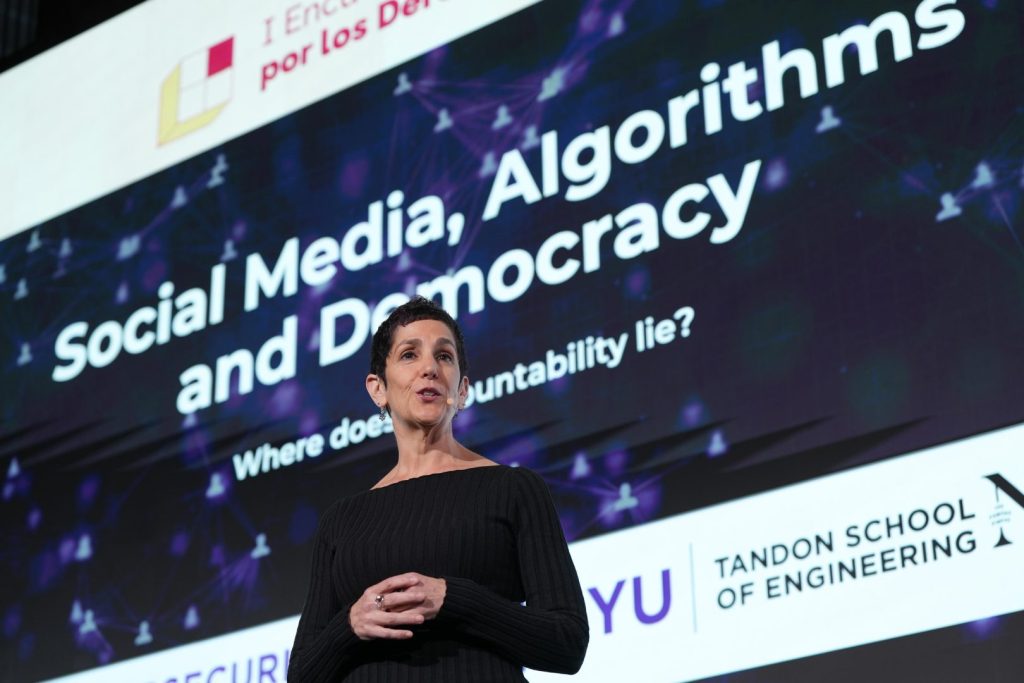
Yael Eisenstat, technology policy expert and former Facebook executive, warns about the impact of algorithms on democracy at the 1st Global Digital Rights Forum
Eisenstat calls for greater transparency and accountability in the way social media algorithms operate, given their influence on social wellbeing and public debate.
“The more we understand how social media works, the stronger we become in changing it,” Eisenstat explains.
13/May/2026
Technology policy expert and former Facebook executive Yael Eisenstat opened the programme of the 1st Global Digital Rights Forum with a speech highlighting the “direct impact that algorithms and social media have on democracy, security and social wellbeing”. During her address at the event — organised in Barcelona by the Government of Spain and Mobile World Capital within the framework of the Digital Rights Observatory — Eisenstat stressed that “platforms decide which accounts are amplified and which are silenced, affecting how messages spread and whether they reach the public”. Far from being neutral, this algorithmic approach “encourages the spread of disinformation and extremist rhetoric”.
“Although disinformation has existed since the beginning of time, what changes on the internet is the scale and the incentive structure: these business models reward the most emotional and sensationalist content because it generates more engagement. Studies have shown that misinformation proliferates at high percentages in political speech online, from all sides.” explained the former Facebook executive, who is now Policy Director at Cybersecurity for Democracy, during her keynote speech.
Eisenstat also referred to the growing presence of Artificial Intelligence in everyday life: “The AI companies promise a beautiful future where their products are improving our lives. This is part of what I call the myth of tech exceptionalism. They promise us a better future to avoid accountability or regulation today.” The former Facebook executive also stressed that “I use some of these products, but carefully. I do not give them access, for example, to my calendars or emails.” because “when these services are free, you are the product. They are using your data to sell targeting tools to advertisers, to sell you products. These same tools are used to target political narratives to you.”

Regulating digital environments
Another key theme of her speech focused on the need for transparency regarding how social media recommendation algorithms work and the urgency of establishing effective regulatory mechanisms that force platforms to take responsibility for the impact of their algorithms. “These companies have scaled recklessly for years due to a very permissive legal environment in the U.S. And right now, we have less protections from the companies themselves than we had over the past decade.” the expert commented.
However, Eisenstat argues that technology companies themselves “are aware of the harmful effects their platforms generate, particularly for minors”.
Against this backdrop, she pointed out that Europe is advancing regulatory initiatives aimed at requiring greater transparency and accountability from platforms regarding the operation and effects of their algorithms. establishing effective regulatory mechanisms that oblige platforms to take responsibility for the impact of their algorithms.
Stay up to date about everything
Subscribe to stay up to date with the latest content from Mobile World Capital Barcelona.